Soil Systems: Turning Food Waste Into Soil Gold
Soil Systems is a London-based startup with a simple mission
Stop sending nutrients to landfill.
Start sending them back to the soil.
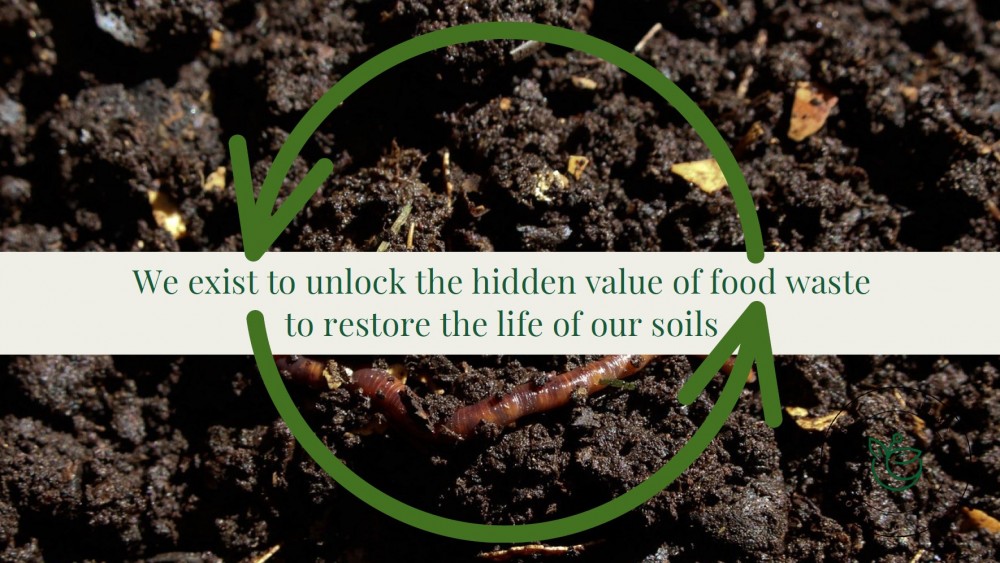
Founded in 2023 by four friends, Soil Systems connects two urgent challenges - Food waste and soil degradation. It all began with one big question.
Why does so much food end up in black bin bags?
Rosie Wesemann, who runs two restaurants in London, saw the problem daily.
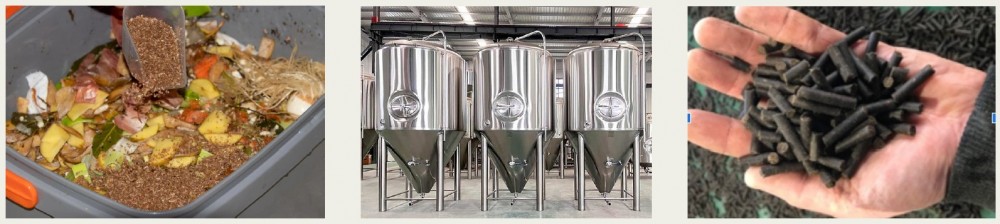
Mountains of hospitality waste, which were perfectly nutrient-rich, but completely discarded. So, Soil Systems began exploring a better way and soon, bokashi fermentation became their secret ingredient.This microbial process, which is already popular with gardeners breaks down organic waste without oxygen. However, scaling it commercially is tricky.
Soil Systems worked with experts to stabilise the fermented material.
Then they transformed it into dense, consistent pellets. Now food waste becomes a soil amendment. Not a landfill burden.
Pellet Power: Cleaner, Denser, Easier
Unlike loose compost, these pellets offer real advantages.
They are dry, stable, and simple to handle. They are easier to transport, store and apply for growers. As Amy Agnew explains, consistency is everything.Food waste varies a lot, and oil, moisture, starch all affect pellet quality. However, through repeated small batches and R&D support, the team refined the process, and have created a product gardeners and farmers can actually use.
Nutrient Density That Packs a Punch
Soil Systems pellets are not just convenient.They are powerful.
According to laboratory analysis, they are three to four times more nitrogen-dense than compost or manure. They also contain high levels of organic carbon, which is important because carbon supports fertility, resilience, and crop yields. And because the feedstock comes from food waste, the nutrient profile is richer and it keeps nutrients inside the food system.
Early Trials, Big Results
Soil Systems has already carried out growing trials with NIAB with promising results. Tomatoes, runner beans, lettuces, and dahlias were tested.Compared to controls, harvest weights doubled, tripled, and for runner bean yields were nearly four times higher.
More trials are planned for 2026 where focus will include soil health indicators, such as organic matter, biological activity and long-term regeneration.
Backed by SHAKE Climate Change Programme
Soil Systems is supported by the Rothamsted-led SHAKE Climate Change programme.
This partnership helps move the project beyond proof of concept.
It adds technical credibility, strengthens research connections, and supports pilot-scale production. Soil Systems also collaborates with major partners like NIAB, Harper Adams University and University of Reading. With their partners, they are building evidence and trust.
Local Loops, Not Mega Factories
Soil Systems is not chasing massive centralised plants. Instead, they plan small modular processing units that operate close to where food waste is generated.
This reduces transport, lowers emissions, and keeps systems local.
The goal is replication, not domination.
A model that works city by city - neighbourhood by neighbourhood. To launch the concept, the team is developing pilot supply chains with hospitality businesses and local authorities.
A forthcoming pilot in Camden will demonstrate the full loop of locally collected food waste, to be processed locally, and returned to nearby growers.
That is circular economy in action.
Scaling With Purpose
By their fifth year, Soil Systems hopes to produce over 2,000 tonnes of pellets.
This will happen through multiple modular units, which is an approach that allows them to stay flexible, community-based, and very scalable.
2026 will be a major pilot year. And SHAKE funding will enable full-cycle testing to prove that food waste does not have to be the end. With Soil Systems, it becomes the beginning.
For more info or to join an upcoming pilot - visit https://www.soil-systems.com/